
The mortgage industry is undergoing rapid transformation driven by digital disruption, regulatory pressure, and the need for operational efficiency. To stay competitive, mortgage companies are increasingly turning to Global Capability Centers (GCCs) as a strategic lever to scale operations, reduce costs, and enhance service delivery.
A well-designed GCC is no longer just a cost-saving offshore unit—it is a value-driven hub that enables innovation, compliance, analytics, and customer experience transformation. For mortgage firms dealing with complex processes such as underwriting, loan servicing, compliance, and risk management, GCCs offer a powerful model to centralize and optimize global operations.
This guide explains how mortgage companies can successfully build GCCs, the benefits they unlock, and a step-by-step roadmap to implementation.
What is a GCC in the Mortgage Industry?
A Global Capability Center (GCC) is a dedicated offshore or nearshore unit established by an organization to deliver business-critical functions. In the mortgage sector, GCCs typically handle:
- Loan processing and underwriting support
- Mortgage servicing and collections
- Compliance and regulatory reporting
- Risk and fraud detection
- Data analytics and reporting
- Customer support operations
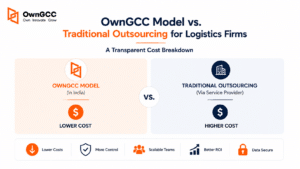
Unlike traditional outsourcing, GCCs operate as an extension of the parent organization, maintaining full control over processes, talent, and technology.
Why Mortgage Companies Are Investing in GCCs
Mortgage companies face multiple operational challenges—tight margins, fluctuating interest rates, regulatory scrutiny, and increasing borrower expectations. GCCs address these issues effectively.
Cost Optimization and Scalability
Mortgage operations are labor-intensive. GCCs enable companies to reduce operational costs by 30–50% while maintaining quality. They also provide the flexibility to scale teams up or down based on loan volumes.
Access to Skilled Talent
Countries like India offer a deep talent pool with expertise in:
- Mortgage underwriting
- Financial analysis
- Compliance and risk
- Data engineering and analytics
This allows companies to build specialized teams without talent shortages.
24/7 Operations
With a global delivery model, mortgage firms can operate round the clock, ensuring faster turnaround times for loan approvals and servicing.
Improved Compliance and Risk Management
GCCs can centralize compliance processes, ensuring adherence to regulations such as:
- RESPA (Real Estate Settlement Procedures Act)
- TILA (Truth in Lending Act)
- GDPR (for global operations)
Key Functions Mortgage GCCs Can Handle
A successful mortgage GCC typically evolves from transactional tasks to strategic functions.
Loan Origination Support
- Application intake and validation
- Credit checks and documentation
- Pre-underwriting analysis
Underwriting and Processing
- Income and asset verification
- Risk assessment
- Decision support for underwriters
Mortgage Servicing
- Payment processing
- Escrow management
- Customer queries and support
Compliance and Audit
- Regulatory reporting
- Quality assurance checks
- Internal audits
Data Analytics and Reporting
- Portfolio performance analysis
- Risk modeling
- Predictive analytics for defaults
Technology and Automation
- Workflow automation
- AI-based underwriting tools
- CRM and LOS (Loan Origination Systems) management
Step-by-Step Guide to Building a Mortgage GCC
Building a GCC requires strategic planning, execution discipline, and long-term vision.
1. Define Your GCC Strategy
Start by identifying:
- Business objectives (cost, efficiency, innovation)
- Functions to be migrated
- Target operating model
A clear strategy ensures alignment between business goals and GCC capabilities.
2. Choose the Right Location
Location plays a critical role in GCC success. Key factors include:
- Talent availability
- Cost advantages
- Regulatory environment
- Infrastructure and connectivity
India is a leading destination due to its strong financial services talent and mature GCC ecosystem.
3. Select the Right Operating Model
Mortgage companies can choose from:
- Captive GCC Model – Full ownership and control
- Build-Operate-Transfer (BOT) – Partner-led setup with eventual ownership
- Hybrid Model – Combination of captive and outsourcing
The choice depends on risk appetite, investment capacity, and speed to market.
4. Build the Right Talent Strategy
Talent is the backbone of a GCC. Focus on:
- Hiring domain experts in mortgage operations
- Upskilling teams in compliance and technology
- Creating leadership pipelines
Retention strategies such as career growth, training, and engagement are equally important.
5. Implement Robust Technology Infrastructure
Technology enables efficiency and scalability. Key components include:
- Loan Origination Systems (LOS)
- Robotic Process Automation (RPA)
- AI/ML tools for underwriting
- Data analytics platforms
A cloud-first approach ensures flexibility and cost efficiency.
6. Establish Governance and Compliance Frameworks
Strong governance ensures seamless operations across geographies.
- Define KPIs and SLAs
- Implement quality assurance processes
- Ensure regulatory compliance
- Set up risk management frameworks
7. Focus on Process Optimization and Automation
Mortgage GCCs should move beyond manual processing by:
- Automating repetitive tasks
- Standardizing workflows
- Using AI for document verification
This improves accuracy and reduces turnaround time.
8. Scale and Transform
Once the GCC stabilizes, expand into:
- Advanced analytics
- Customer experience transformation
- Digital innovation initiatives
The goal is to evolve from a support center to a strategic hub.
Benefits of GCCs for Mortgage Companies
Faster Loan Processing
Automation and round-the-clock operations reduce processing time significantly.
Enhanced Customer Experience
Dedicated support teams improve responsiveness and borrower satisfaction.
Better Risk Management
Centralized data and analytics enable proactive risk mitigation.
Operational Efficiency
Standardized processes and automation reduce errors and improve productivity.
Innovation Enablement
GCCs act as hubs for digital transformation, driving innovation in mortgage services.
Challenges in Building Mortgage GCCs (and How to Overcome Them)
Regulatory Complexity
Solution: Build dedicated compliance teams and invest in regulatory technology.
Talent Retention
Solution: Offer competitive compensation, career growth, and continuous learning.
Data Security Concerns
Solution: Implement robust cybersecurity frameworks and data governance policies.
Change Management
Solution: Ensure strong leadership alignment and clear communication during transition.
Future of Mortgage GCCs
The future of GCCs in the mortgage industry is driven by:
- AI-powered underwriting
- Hyperautomation of loan processes
- Advanced analytics for risk and fraud detection
- Digital borrower experiences
GCCs will increasingly become innovation hubs, not just operational centers.
Why Choose OwnGCC for Building Your Mortgage GCC
OwnGCC specializes in helping mortgage companies design, build, and scale GCCs tailored to their business needs.
What OwnGCC Offers:
- End-to-end GCC setup and strategy
- Talent acquisition and workforce management
- Technology implementation and automation
- Compliance and governance frameworks
- Continuous optimization and scaling
With deep expertise in financial services and global operations, OwnGCC ensures a seamless and future-ready GCC journey.
Conclusion
For mortgage companies looking to scale globally, reduce costs, and enhance operational efficiency, building a GCC is no longer optional—it is a strategic necessity.
A well-executed GCC enables organizations to:
- Streamline mortgage operations
- Improve compliance and risk management
- Deliver superior customer experiences
- Drive innovation and digital transformation
By partnering with experts like OwnGCC, mortgage firms can accelerate their GCC journey and unlock long-term business value.
FAQs
What is a GCC in the mortgage industry?
A GCC (Global Capability Center) is an offshore unit that handles key mortgage functions such as loan processing, underwriting, servicing, and compliance.
Why should mortgage companies build GCCs?
Mortgage companies build GCCs to reduce costs, access skilled talent, improve efficiency, and enable 24/7 operations.
Which location is best for a mortgage GCC?
India is one of the top destinations due to its large talent pool, cost advantages, and strong financial services ecosystem.
What functions can be handled in a mortgage GCC?
Functions include loan origination, underwriting, servicing, compliance, analytics, and technology support.
How long does it take to set up a GCC?
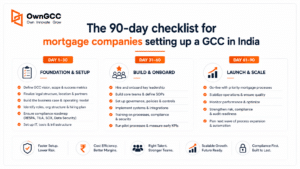
Typically, it takes 6–12 months depending on the scale, location, and operating model.
What are the key challenges in building a GCC?
Common challenges include regulatory compliance, talent retention, data security, and change management.