The insurance industry is under constant pressure to do more with less. Policyholders expect faster service, regulators demand greater compliance, and competitors continue to invest in technology-driven customer experiences.
At the same time, insurance carriers, agencies, MGAs, TPAs, and brokers are facing rising operational costs, talent shortages, and increasing administrative workloads.
This is why insurance business process outsourcing (Insurance BPO) has evolved from a cost-saving tactic into a strategic growth lever.
Today, leading insurance organizations are outsourcing key operational functions not only to reduce expenses but also to improve efficiency, scalability, customer experience, and business agility.
In this guide, we’ll explore why insurance companies outsource, which processes are best suited for outsourcing, the benefits and risks involved, and how to choose the right insurance BPO partner.
What Is Insurance BPO?
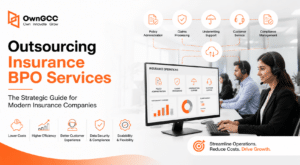
Insurance BPO (Business Process Outsourcing) refers to delegating specific insurance-related business functions to an external service provider with expertise in insurance operations.
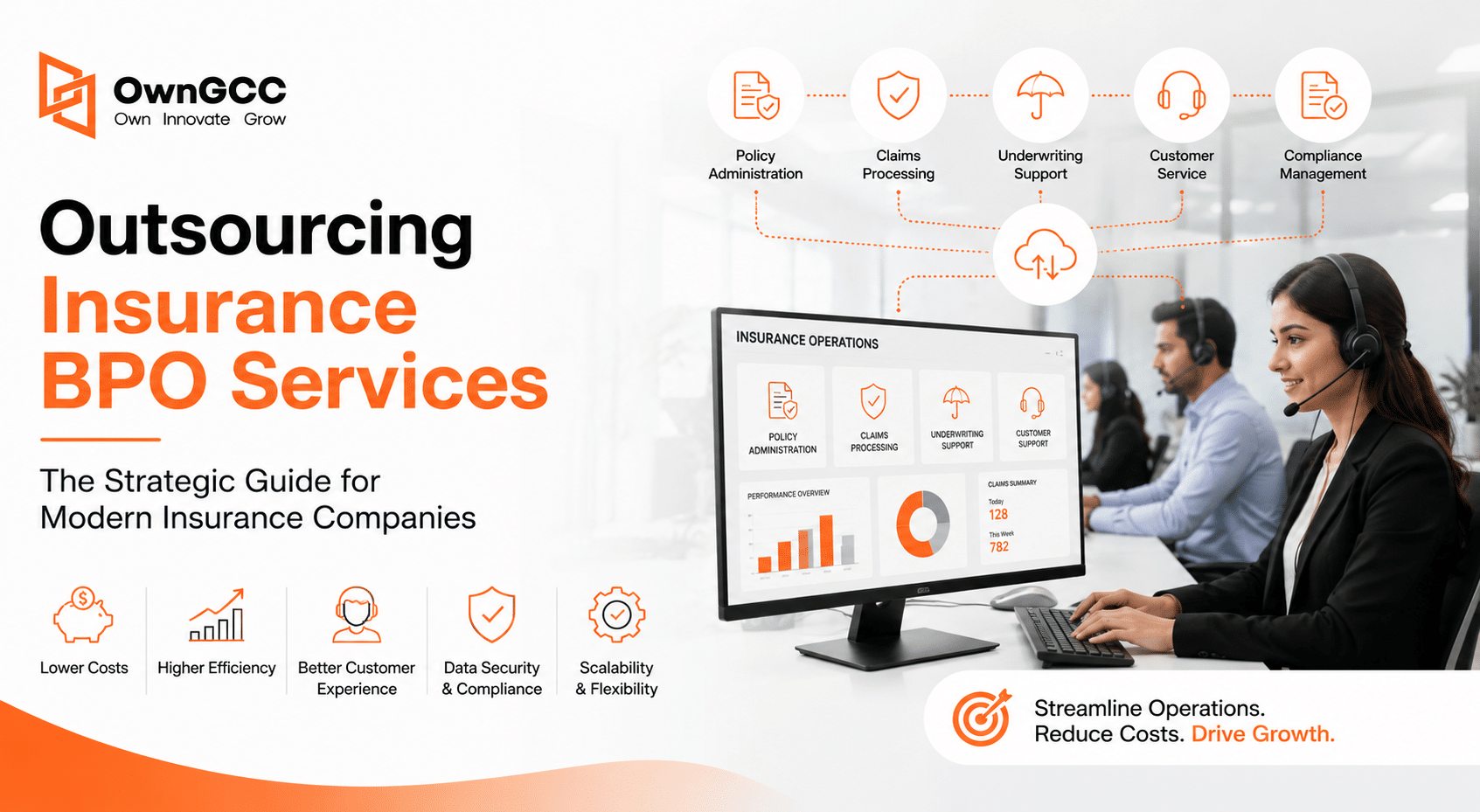
These providers manage operational processes such as:
- Policy administration
- Claims processing
- Underwriting support
- Data entry
- Customer service
- Premium accounting
- Compliance documentation
- Back-office administration
Rather than building large internal teams for every operational function, insurers leverage specialized outsourcing partners to handle repetitive, process-driven activities efficiently.
The result is a leaner organization that can focus on strategic priorities such as product innovation, customer acquisition, risk management, and growth.
Why Insurance Companies Are Increasingly Outsourcing Operations
The insurance landscape has changed dramatically over the last decade.
Several factors are driving outsourcing adoption:
Rising Operational Costs
Hiring, training, and retaining insurance operations staff has become increasingly expensive.
Beyond salaries, insurers must manage:
- Employee benefits
- Office infrastructure
- Technology costs
- Recruitment expenses
- Training programs
Insurance BPO providers can often deliver the same services at a significantly lower operating cost.
Talent Shortages
Many insurance organizations struggle to hire experienced professionals for:
- Claims administration
- Policy servicing
- Underwriting support
- Insurance accounting
- Compliance management
Outsourcing provides immediate access to trained insurance specialists without lengthy hiring cycles.
Need for Scalability
Insurance workloads fluctuate throughout the year.
Examples include:
- Open enrollment periods
- Catastrophic events
- Seasonal policy renewals
- Claims surges
An outsourcing partner allows insurers to quickly scale operations up or down without major workforce disruptions.
Digital Transformation Pressures
Insurance companies are investing heavily in:
- Automation
- Artificial Intelligence
- Data analytics
- Customer self-service platforms
Outsourcing operational work frees internal resources to focus on these strategic initiatives.
Benefits of Outsourcing Insurance BPO Services
1. Significant Cost Reduction
One of the most immediate benefits is lower operational expenditure.
Companies can reduce costs related to:
- Staffing
- Infrastructure
- Training
- Technology investments
- Employee turnover
Many insurers report operational savings ranging from 30% to 60% depending on the function outsourced.
2. Faster Turnaround Times
Dedicated insurance processing teams can complete tasks faster because:
- Processes are standardized
- Teams are specialized
- Operations often run across multiple shifts
This results in:
- Faster claims resolution
- Quicker policy issuance
- Reduced backlog
- Improved customer satisfaction
3. Access to Insurance Expertise
Experienced Insurance BPO providers employ specialists with knowledge of:
- P&C insurance
- Life insurance
- Health insurance
- Commercial insurance
- Workers compensation
- Specialty insurance products
This expertise reduces training requirements and accelerates operational performance.
4. Enhanced Customer Experience
Customer expectations continue to rise.
Outsourcing support functions can improve:
- Response times
- Policy servicing
- Claims communication
- Customer inquiries
- First-contact resolution
Better service directly impacts customer retention and brand reputation.
5. Improved Business Continuity
Insurance BPO providers typically maintain:
- Disaster recovery plans
- Business continuity protocols
- Redundant infrastructure
- Distributed workforce capabilities
This ensures operational resilience during disruptions.
6. Better Compliance Management
Insurance regulations continue to evolve.
Leading outsourcing providers maintain processes that support compliance requirements through:
- Documentation controls
- Audit readiness
- Process standardization
- Data security measures
Insurance Processes Commonly Outsourced
Not every function should be outsourced.
The best candidates are repeatable, process-driven activities.
Policy Administration
Includes:
- Policy issuance
- Endorsements
- Renewals
- Cancellations
- Policy updates
Claims Processing Support
Claims outsourcing often covers:
- FNOL (First Notice of Loss)
- Claims intake
- Documentation review
- Claims validation support
- Settlement coordination
- Claims status updates
Underwriting Support
Administrative underwriting functions include:
- Risk data collection
- Application processing
- Data verification
- Underwriting documentation
- Quote preparation
Insurance Data Entry
Data-intensive tasks such as:
- Policy data capture
- Document indexing
- CRM updates
- System migration support
are frequently outsourced.
Insurance Accounting
Common accounting services include:
- Premium reconciliation
- Commission processing
- Accounts receivable
- Accounts payable
- Financial reporting support
Customer Service
Insurance customer support teams often handle:
- Policy inquiries
- Billing questions
- Coverage explanations
- Renewal reminders
- Service requests
When Should an Insurance Company Consider Outsourcing?
Insurance outsourcing is particularly valuable when:
You Are Experiencing Rapid Growth
Growing policy volumes often outpace internal staffing capacity.
Backlogs Are Increasing
Long processing times typically indicate operational bottlenecks.
Operating Costs Are Rising
Outsourcing can improve efficiency without compromising quality.
Customer Satisfaction Is Declining
Delays and service issues often stem from overloaded operations teams.
Internal Teams Are Focused on Administrative Work
Highly skilled insurance professionals should focus on strategic, revenue-generating activities rather than repetitive tasks.
How to Successfully Outsource Insurance Operations
Step 1: Identify Suitable Processes
Evaluate operations based on:
- Volume
- Complexity
- Compliance requirements
- Standardization potential
Start with highly repetitive processes.
Step 2: Define Clear Objectives
Establish measurable goals such as:
- Cost reduction
- Turnaround time improvement
- Accuracy enhancement
- Customer satisfaction improvement
Step 3: Evaluate Industry Experience
Choose providers with proven insurance expertise.
Ask about:
- Insurance clients served
- Process specialization
- Regulatory experience
- Technology capabilities
Step 4: Review Security and Compliance Standards
Insurance organizations handle sensitive customer information.
Verify:
- Data security protocols
- Access controls
- Audit procedures
- Compliance frameworks
Step 5: Start with a Pilot Program
Before outsourcing large volumes, begin with a limited process scope.
This allows performance validation before expansion.
Step 6: Establish Performance Metrics
Track KPIs such as:
| KPI | Why It Matters |
|---|---|
| Turnaround Time | Measures processing speed |
| Accuracy Rate | Ensures quality control |
| SLA Compliance | Tracks contractual performance |
| Customer Satisfaction | Measures service impact |
| Cost Per Transaction | Evaluates efficiency gains |
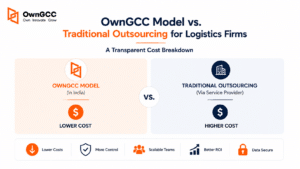
Traditional Outsourcing vs Building an Insurance GCC
As insurance companies mature, many eventually reach a point where traditional outsourcing is no longer enough.
A Global Capability Center (GCC) offers:
| Traditional BPO | Insurance GCC |
|---|---|
| Vendor-owned workforce | Company-owned workforce |
| Limited process control | Full operational control |
| Shared resources | Dedicated team |
| Service contract model | Long-term capability model |
| Process execution | Process ownership and innovation |
Many insurance companies begin with outsourcing and later transition to a GCC model as operations scale.
The Future of Insurance Outsourcing
The next generation of Insurance BPO will be powered by:
- Artificial Intelligence
- Intelligent document processing
- Predictive analytics
- Workflow automation
- Digital claims management
- Conversational AI
The most successful insurers will combine human expertise with technology-enabled outsourcing models that improve efficiency while maintaining service quality.
Final Thoughts
Insurance outsourcing is no longer simply about reducing costs.
It is about creating a more agile, scalable, and efficient operating model that enables insurers to focus on growth, customer experience, and innovation.
Whether you’re a carrier, MGA, broker, agency, or TPA, the right Insurance BPO strategy can help you streamline operations, improve service levels, reduce costs, and position your business for long-term success.
The key is selecting the right processes, partnering with experienced insurance specialists, and building a framework that supports both operational excellence and future growth.