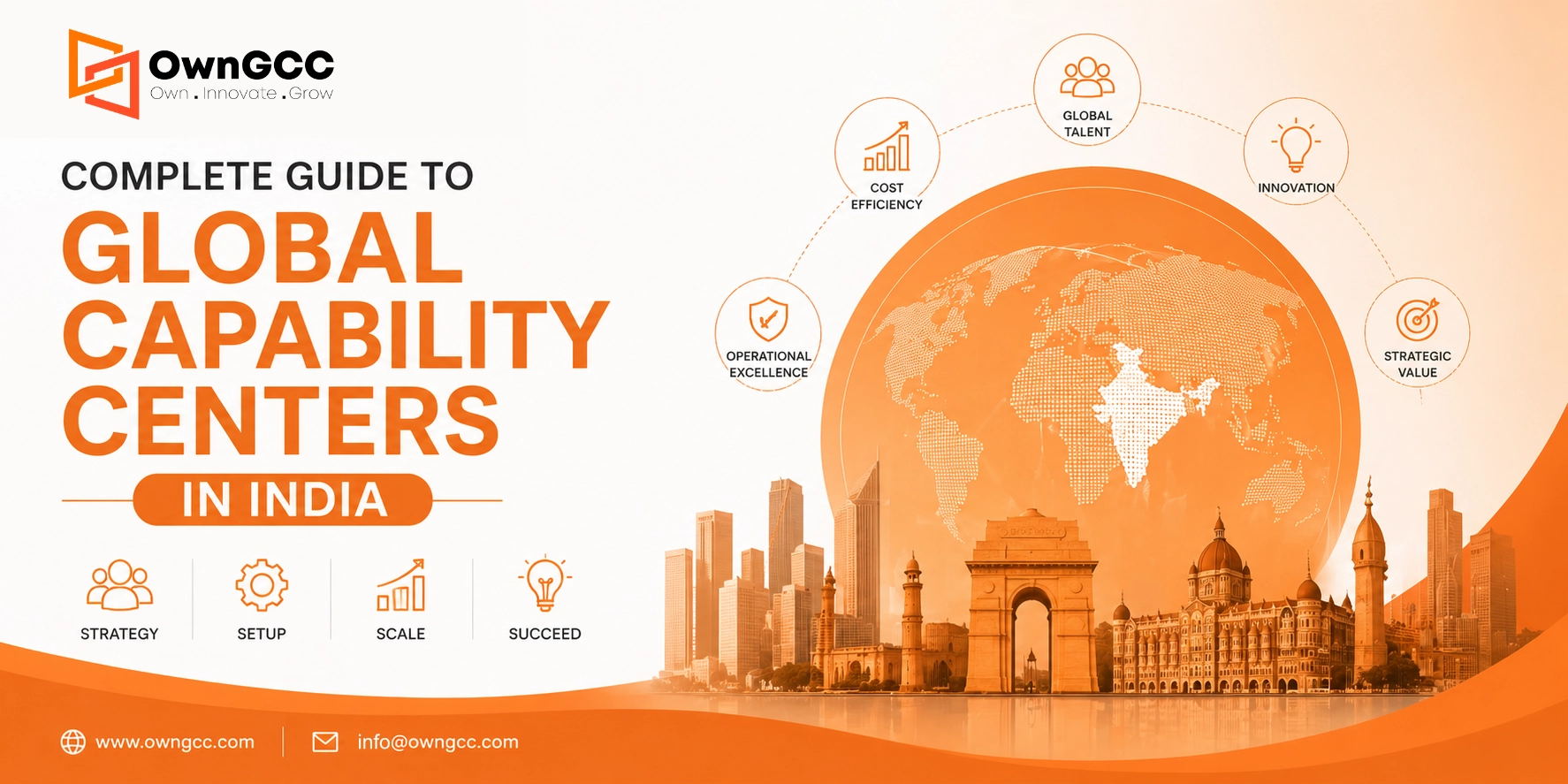
Global Capability Centers (GCCs) have become a cornerstone of modern enterprise strategy. Once viewed as cost-saving offshore units, GCCs in India have evolved into high-impact hubs that drive innovation, digital transformation, and global business growth. For organizations exploring expansion or operational efficiency, India remains the most attractive destination for building and scaling GCCs.
This comprehensive guide by OwnGCC provides a deep dive into everything global companies need to know about setting up, managing, and scaling GCCs in India.
What is a Global Capability Center (GCC)?
A Global Capability Center (GCC) is a dedicated offshore unit established by multinational companies to deliver a wide range of business functions. These functions include IT services, finance, HR, analytics, customer experience, R&D, and more.
Unlike traditional outsourcing models, GCCs operate as an extension of the parent organization, aligning closely with its strategic objectives. They offer greater control, improved quality, and long-term value creation.
Evolution of GCCs in India
India’s GCC journey began in the late 1990s, primarily driven by cost arbitrage and access to a large talent pool. Early GCCs focused on back-office operations such as data processing and customer support.
Over the last two decades, the landscape has transformed significantly:
- 2000s: Expansion into IT services and shared services
- 2010s: Emergence of analytics, digital, and product engineering capabilities
- 2020s: Shift toward innovation, AI, and strategic business functions
Today, India hosts over 1,500 GCCs, contributing significantly to global operations across industries such as BFSI, healthcare, retail, manufacturing, and technology.
Why India is the Preferred GCC Destination
1. Deep Talent Pool
India produces millions of graduates annually, including engineers, data scientists, finance professionals, and management experts. This diverse talent base enables companies to build cross-functional teams within their GCCs.
2. Cost Efficiency with High Value
While cost savings remain a factor, the real value lies in high-quality output at competitive costs. Organizations can achieve better ROI by combining cost efficiency with innovation capabilities.
3. Strong Digital Ecosystem
India has a rapidly growing digital ecosystem supported by startups, technology hubs, and global tech companies. This ecosystem fosters collaboration and accelerates innovation within GCCs.
4. Favorable Government Policies
Government initiatives such as “Digital India” and “Make in India” have created a supportive environment for foreign investments and GCC expansion.
5. Mature GCC Ecosystem
India’s GCC ecosystem is highly evolved, with established service providers, consulting firms, and infrastructure support, making it easier for companies to set up and scale operations.
Key Functions Managed by GCCs in India
Modern GCCs handle a wide range of business-critical functions:
IT and Digital Services
- Software development
- Cloud computing
- Cybersecurity
- DevOps and platform engineering
Finance and Accounting
- Accounts payable/receivable
- Financial reporting
- Tax compliance
- Risk management
Data Analytics and AI
- Data engineering
- Business intelligence
- Predictive analytics
- AI and machine learning
Customer Experience
- Customer support
- Omnichannel engagement
- Customer success management
Research and Development
- Product design
- Engineering innovation
- Prototyping and testing
HR and Talent Management
- Recruitment
- Payroll processing
- Learning and development
Types of GCC Operating Models
1. Captive Model
The company fully owns and operates the GCC. This model offers maximum control and alignment but requires significant investment.
2. Build-Operate-Transfer (BOT) Model
A third-party partner sets up and runs the GCC initially, then transfers ownership to the company after stabilization.
3. Hybrid Model
Combines in-house operations with outsourced services for flexibility and scalability.
4. Virtual GCC Model
Leverages remote teams and digital infrastructure without a large physical presence.
Key Locations for GCCs in India
India offers multiple cities with strong GCC ecosystems:
Tier-1 Cities
- Bangalore: Known as the Silicon Valley of India, ideal for tech and innovation
- Hyderabad: Strong in IT, pharma, and analytics
- Chennai: Manufacturing and engineering hub
- Pune: Growing IT and automotive center
- Gurgaon/Noida: Financial services and consulting
Emerging Tier-2 Cities
- Coimbatore
- Kochi
- Ahmedabad
- Jaipur
These cities offer lower operational costs and access to untapped talent pools.
Step-by-Step Process to Set Up a GCC in India
1. Define Business Objectives
Clearly outline the purpose of the GCC—cost optimization, innovation, or global expansion.
2. Choose the Right Location
Evaluate cities based on talent availability, infrastructure, and cost.
3. Legal and Regulatory Setup
Register the entity, comply with tax regulations, and obtain necessary approvals.
4. Infrastructure Setup
Secure office space, IT infrastructure, and security systems.
5. Talent Acquisition
Hire leadership and build core teams aligned with business goals.
6. Technology Implementation
Deploy digital tools, automation platforms, and data systems.
7. Governance Framework
Establish reporting structures, KPIs, and performance metrics.
8. Scale and Optimize
Continuously improve processes and expand capabilities.
Talent Strategy for GCCs
Talent is the backbone of any successful GCC. Companies must adopt a forward-looking talent strategy:
- Focus on niche skills such as AI, data science, and cybersecurity
- Build leadership pipelines within India
- Invest in continuous learning and upskilling
- Promote a strong organizational culture
Retention strategies, including career growth opportunities and flexible work models, are critical to reducing attrition.
Technology and Innovation in GCCs
Technology is at the core of GCC transformation. Leading GCCs are investing in:
- Artificial Intelligence and Machine Learning
- Robotic Process Automation (RPA)
- Cloud computing and SaaS platforms
- Data analytics and visualization tools
Innovation labs within GCCs are becoming common, enabling companies to experiment with emerging technologies and develop new solutions.
Governance and Leadership
Strong governance is essential for GCC success. Companies must:
- Align GCC leadership with global business units
- Establish clear KPIs and accountability frameworks
- Ensure compliance with global standards
- Foster collaboration across geographies
Leadership teams should have both domain expertise and cross-cultural management skills.
Challenges in Setting Up GCCs in India
While India offers numerous advantages, companies may face challenges such as:
Talent Attrition
High competition for skilled professionals can lead to attrition.
Regulatory Complexity
Navigating legal and tax frameworks can be complex for new entrants.
Cultural Integration
Aligning offshore teams with global culture requires effort.
Infrastructure Variability
While Tier-1 cities are well-developed, some Tier-2 cities may have limitations.
How to Overcome GCC Challenges
- Develop strong employer branding to attract talent
- Partner with local experts for legal and compliance support
- Invest in cultural training and communication frameworks
- Choose locations strategically based on long-term needs
Future of GCCs in India
The future of GCCs in India is highly promising. Key trends include:
- Increased adoption of AI and automation
- Expansion into Tier-2 and Tier-3 cities
- Greater focus on innovation and R&D
- Shift toward outcome-driven performance models
- Enhanced role in global strategy and decision-making
By 2030, GCCs in India will be central to how global enterprises operate and compete.
Role of OwnGCC in Your GCC Journey
At OwnGCC, we specialize in helping global companies establish and scale their GCCs in India. Our expertise spans:
- GCC strategy and consulting
- Location analysis and setup support
- Talent acquisition and workforce planning
- Technology and infrastructure advisory
- Ongoing optimization and scaling
We act as your strategic partner, ensuring that your GCC delivers maximum value from day one.
Conclusion
Global Capability Centers in India are no longer just operational units—they are strategic assets that drive innovation, efficiency, and growth. With its unmatched talent pool, strong ecosystem, and evolving capabilities, India continues to lead the global GCC landscape.
For companies looking to build future-ready operations, investing in a GCC in India is not just an option—it is a strategic imperative.
Partner with OwnGCC to navigate this journey with confidence and unlock the full potential of your global operations.
FAQs
What is the main purpose of a GCC?
The primary purpose of a GCC is to deliver business functions efficiently while driving innovation and strategic value.
Why is India popular for GCCs?
India offers a large talent pool, cost advantages, and a strong digital ecosystem, making it an ideal destination.
How long does it take to set up a GCC in India?
Typically, it takes 3 to 9 months, depending on the scale and complexity.
What industries use GCCs?
Industries such as BFSI, healthcare, technology, retail, and manufacturing widely use GCCs.
What is the future of GCCs?
GCCs will evolve into innovation hubs, focusing on AI, data, and strategic business functions by 2030.